Craft School: Monster Class
- 4.4
- Rating
- 10.00M
- Installs
- Free
- Price
 Analysis by App-foxy
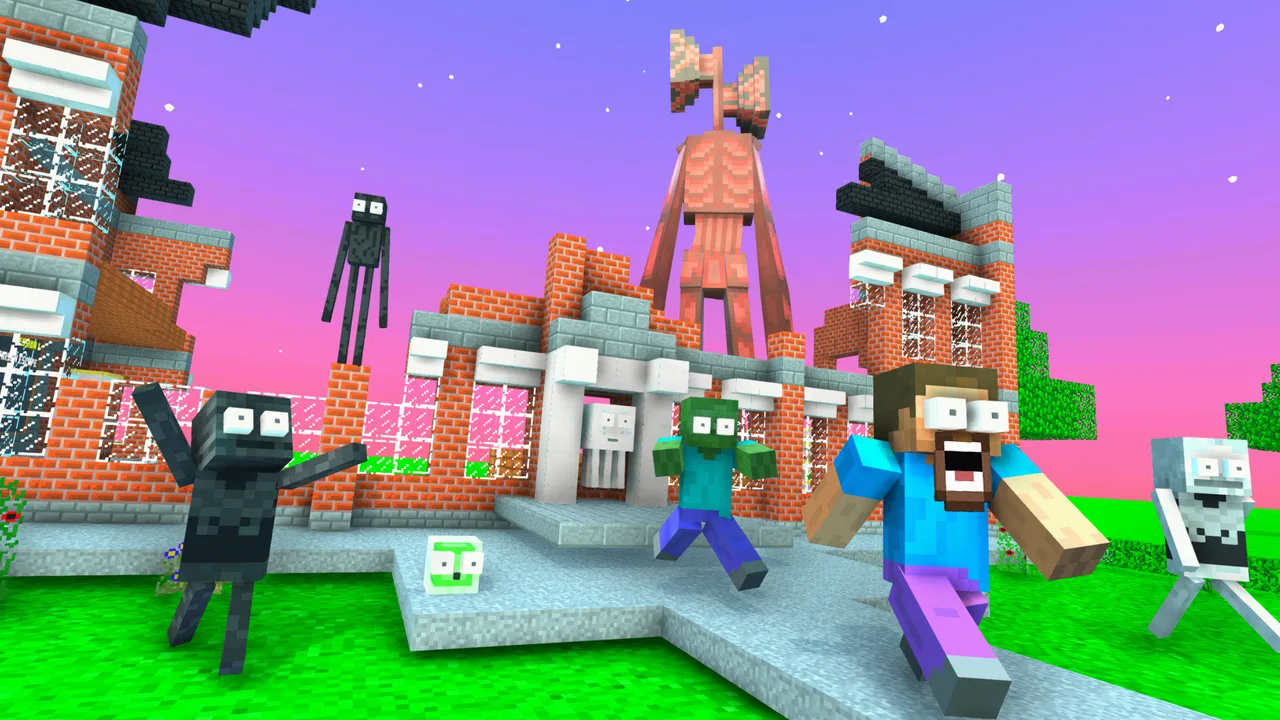
I spent time with Craft School: Monster Class as a light adventure game, and my first impression was that it is easiest to enjoy in short, informal sessions. The premise places Herobrune and Monster Class inside a series of unusual Craft School challenges, so the appeal comes from seeing what each obstacle asks you to do next rather than from building a long-term competitive routine. It feels aimed at players who want a playful mobile distraction with a familiar block-style atmosphere, not at someone searching for a deep role-playing system.
That distinction matters in a shared household. One person can pick it up for a few minutes, hand the device to a younger player, and return later without needing the whole family to understand a complicated control scheme. I found that useful during ordinary downtime: while waiting for food, during a quiet break, or when a child wanted to try something after watching someone else play. The game is free to start, rated for Everyone, and its straightforward presentation makes it approachable, although the presence of optional purchases means I would still set expectations before passing over a shared phone or tablet.
How Craft School: Monster Class works in everyday play
I find Craft School: Monster Class easiest to judge as a quick, shared-device adventure: this section looks at how its challenge-based format fits everyday breaks, family turn-taking, and the small decisions that make a session smoother. That practical view also sets up a closer look at how the school-and-monster setting gives those challenges their identity.
You May Also Like

 Blood Strike: 2.5 Anniversary
Blood Strike’s Loadouts Turn Every Drop Into a Tactical Gamble
A close look at Blood Strike’s custom loadouts: how fast access to signature weapons reshapes its battle royale rhythm, rewards preparation, and narrows the gap between fights.

 Pandora - Music & Podcasts
Pandora’s Music Is Easy to Start, but Harder to Recover
Pandora’s strength is its low-effort path from a seed to a station. Its weak spot is how much confidence it asks you to place in connection, setup, and quiet recovery.

 8 Ball Pool
 Is Built on Rivalries, Rematches, and Routine
A close look at the rivalries, rematches, shared routines, and unanswered safety questions that turn a quick pool match into a persistent mobile community.

 Samsung Music
’s Quiet Strength Is Playing What You Already Own
Its reach comes less from spectacle than from dependable access to a personal library. That simplicity is both the app’s strongest retention engine and its ceiling.

 AccuWeather: Weather Radar
AccuWeather Review: A Quick, Clear Forecast for Everyday Decisions
For everyday plans, the best forecast is the one you can understand quickly. AccuWeather makes rain timing, radar, and local conditions easy to act on, with a few trade-offs.

 Hill Climb Racing
Why Hill Climb Racing Still Turns Crashes Into One More Run
A tiny car, a bumpy hill and one more upgrade: Hill Climb Racing keeps resurfacing because its simple chaos makes every near-miss feel personal.
More From Our News Desk
View All News


A challenge-focused adventure rather than a full sandbox
The most important thing to understand is that this is not the same proposition as an open-ended crafting sandbox. The Craft School setting gives the game a recognizable theme, but the experience is organized around crazy challenges involving its characters and world. I approached each session by looking for the next task and trying to understand the intended route, rather than expecting to spend an hour freely designing a base or managing a large inventory.
That makes the game easier to share. A player can explain what is happening in a sentence: “Try to get through this school challenge.” There is less pressure to preserve a large personal project while another person uses the device. For a household with several people taking turns, that simplicity is a real strength. It also means the game may feel limited to players who want extensive exploration, detailed construction, or a story with a large cast and carefully developed character arcs.
I liked the way the school theme gives the challenges a sense of place. It is more memorable than a collection of unrelated menus, and the Monster Class idea adds a playful edge to the adventure. Still, the theme does not transform the game into a conventional school simulator. I would not choose it for lessons, educational progression, or realistic classroom management; the school is a setting for action and obstacles, not a substitute for an educational app.
Why short sessions suit it best
My practical recommendation is to treat each play period as a small challenge run. That approach keeps the game fresh and reduces the frustration that can come from trying to force a long session out of a mobile adventure designed around individual obstacles. If I had only a few minutes, I could focus on learning the immediate objective. If I had more time, I could replay a section and experiment with a different approach instead of feeling obliged to complete a huge campaign.
This also creates a useful routine for younger players: play one section, stop, and hand the device back. It is not a built-in household management feature, so the boundary has to come from the person supervising the device. In my experience, agreeing on the stopping point before starting works better than interrupting suddenly after a difficult attempt. The game’s challenge format gives you a natural stopping point, even though it does not replace a proper timer or family-control tool.
Controls, patience, and the learning curve
The early minutes are best used to learn how the game expects you to approach obstacles. I would not immediately blame the controls if a challenge feels awkward. First, I would watch the character’s movement, identify which parts of the environment are interactive, and try a slower route. In mobile adventure games, rushing often creates mistakes that look like control problems but are really timing or positioning problems.
That said, a player who prefers instant, highly polished action may find the experience less satisfying than a dedicated platform game. Craft School: Monster Class is more attractive when you enjoy testing a challenge and gradually understanding it. It is a weaker choice for someone who wants constant speed, advanced combat depth, or precise competitive play against other players.
Using a shared device without mixing expectations
On a family tablet, I would create a simple turn-taking habit before anyone starts. The first player should say which challenge they are attempting, and the next player should know whether they are continuing that attempt or beginning something separate. This small bit of coordination prevents the common shared-device problem where one person changes the situation and another assumes the game is still exactly as they left it.
I would also avoid treating a single device as if it automatically gives every player a separate identity. The game is installed on the device, but that does not mean each household member has an independent space, progress history, or account boundary. I would not promise children that their progress is isolated unless the device and game setup clearly provide that separation. For casual turns, the safest approach is to agree that the next player may encounter the previous player’s changes.
That is one of the less obvious trade-offs here. The game’s easy handoff is convenient, but convenience is not the same as personal profiles. A shared tablet can work well for occasional play, while a child who wants a carefully protected individual journey may be happier using a personal device or a game designed around explicit player slots.
Purchases and the adult’s role
The game is free, but optional in-app items range from $1.99 to $9.99 each. That price range is important in a shared-device setting because a child may see a purchase prompt even when the adult who owns the device is not actively watching. I would discuss the rule in plain language before play: free to install does not mean every item inside the game is free.
I would also keep purchase approval with the device owner rather than letting a young player make decisions in the excitement of a difficult challenge. This is not a criticism unique to this game; it is simply the sensible boundary whenever a free mobile title includes paid items. If your household does not want any purchase conversations at all, a different game without in-app buying may be a calmer choice.
Another practical point is that the payment boundary belongs to the device and its account setup, not automatically to the game’s characters. If several people use one tablet, do not assume that switching from Herobrune to another character creates a separate spending space. I would check the device’s purchase protections and keep the adult responsible for every confirmation.
Age context and trust
With an Everyone content rating, the game is positioned for a broad audience, and its colorful adventure framing should be easier to introduce to children than a darker or more intense title. Even so, an age label is only one part of a household decision. I would watch a first session with a younger child, not because the rating makes the game unsuitable, but because every child reacts differently to repeated failure, strange monster imagery, and the pressure to keep trying.
The useful question is not simply whether a child can operate the game. It is whether they can stop comfortably, accept that a challenge may require several attempts, and understand that optional items cost real money. A confident older child may manage that conversation easily. A younger player may need an adult nearby, especially on a shared device where the adult’s account and payment settings are already active.
I would also be careful about presenting the game as a learning tool just because it takes place in a school. The setting can encourage curiosity and problem-solving, but the verified age rating does not turn it into formal instruction. For family use, I would describe it honestly as an adventure game with a school-themed world. That keeps expectations clear and avoids asking the game to do a job it was not designed to do.
What the developer and current release tell me
AppVillage Global is the developer, and the current version is 3.6. The game first appeared on Jul 20, 2022, and it supports devices running Android 7.1 or later. Those details make it relevant for households using an older compatible Android device rather than insisting on the newest phone or tablet.
The game has reached over 10 million installs, with a 4.4 average from around 14 thousand ratings. That level of adoption suggests it has found a substantial audience, but I would still treat popularity as a starting point rather than proof that it suits every player. A child who loves quirky challenge games may enjoy it immediately, while a player expecting a full Minecraft-style creative experience may be disappointed despite the large audience.
The store record also shows 172 written reviews. I find the average rating useful for judging the broad reaction, but written comments and personal testing matter more when the main question is whether the game fits your household routine. The central decision is not “Is this popular?” It is “Will the challenge-based format, shared-device boundaries, and optional purchases work for us?”
Where it stands beside familiar alternatives
Compared with a traditional open-world crafting game, this title is more focused and less demanding. You are not committing to a large construction project or a long resource-management session. That makes it better for a quick turn on a shared device, especially when several people want a chance to play. The trade-off is that players who value creativity, building freedom, or a persistent personal world will probably get more satisfaction elsewhere.
Compared with a conventional platform adventure, it has a more playful Craft School identity and a less purely athletic feel. I would choose it for a child who enjoys discovering what a strange challenge is asking, rather than for someone who wants precise speedrunning or a highly competitive scoreboard. A dedicated platformer is the better alternative when movement mastery is the main attraction.
Compared with story-heavy adventure games, Craft School: Monster Class is easier to dip into but may not provide the same emotional investment. There is a benefit in not needing to remember a complicated plot every time the device changes hands. The cost is that players looking for deep character development or a dramatic narrative may find the school-and-monster premise lighter than they hoped.
Small habits that improve the experience
My first tip is to let the player explain the objective before offering help. In a shared household, an adult can accidentally solve the interesting part by grabbing the device too quickly. Asking, “What have you tried?” keeps the child involved and reveals whether the problem is understanding, timing, or simply impatience.
My second tip is to reserve a short “practice turn” for a new player. Instead of handing over the device in the middle of someone else’s serious attempt, start a fresh challenge or agree that the newcomer is only exploring controls. This prevents arguments about lost progress and makes the handoff feel fair.
My third tip is to use the game as a conversation starter about digital purchases. Because the title is free but contains paid items, it gives adults a natural opportunity to explain the difference between downloading a game and buying something within it. That discussion is more valuable than simply saying no after a purchase screen appears.
My fourth tip is to judge the game after several different sessions, not just the first few minutes. The initial novelty of the characters and school setting can be appealing, but the lasting question is whether the challenges remain enjoyable when the player has to repeat an attempt. If repeated failure leads to anger or immediate requests for paid help, the game may not be a good fit for that particular child.
Who should choose it and who should skip it
I would recommend it to families wanting a free, accessible adventure game for occasional turns on an Android device. It is especially suitable for players who enjoy themed obstacles, playful monster characters, and the satisfaction of figuring out what a challenge expects. Its broad age rating and modest device requirement also make it practical for a household with an older compatible phone or tablet.
I would be more cautious if your main priority is independent child accounts, tightly separated progress, or a completely purchase-free environment. I would also skip it for a player seeking a deep crafting sandbox, a serious multiplayer competition, or a large cinematic story. Those needs point toward different kinds of games, and choosing this one for them would create disappointment rather than a fair test.
For a shared household, my verdict is positive but conditional. The best way to use Craft School: Monster Class is as a supervised, turn-based adventure rather than an unsupervised personal platform. Agree on device turns, keep purchase approval with the adult, and be honest that the school theme supports a game rather than formal learning. With those boundaries in place, I found it easy to recommend as a friendly short-session title from AppVillage Global. It is not the deepest adventure on mobile, but it offers a clear, approachable way to fill spare minutes with challenges that are simple to pass around the household.
FAQs for Craft School: Monster Class
01What is the main objective of Craft School: Monster Class?
Craft School: Monster Class is an engaging educational app designed for children. Its main objective is to teach kids various subjects through fun and interactive monster-themed games. The app combines learning with creativity, allowing children to explore different subjects like math, science, and art while being entertained.
02Is Craft School: Monster Class suitable for all age groups?
Craft School: Monster Class is primarily designed for children aged 4-10. The content and difficulty levels are tailored to be age-appropriate, ensuring a safe and enjoyable learning experience. Older children might find the activities too simple, so parents should consider this when deciding if the app is suitable.
03Are there any in-app purchases or ads in Craft School: Monster Class?
While Craft School: Monster Class offers a free version, it does include optional in-app purchases to unlock additional features and content. The app is ad-supported, but ads are child-friendly and non-intrusive. It's advisable for parents to monitor purchases and ad interactions to ensure a safe environment.
04Does Craft School: Monster Class require an internet connection to function?
Craft School: Monster Class can be used both online and offline. However, certain features, such as updates and accessing additional content, may require an internet connection. This flexibility allows children to enjoy the app in various settings, whether at home or on the go.
05How does Craft School: Monster Class ensure educational value?
Craft School: Monster Class collaborates with educators to design its content, ensuring it aligns with early childhood educational standards. The app uses interactive storytelling and problem-solving games to reinforce learning objectives. It encourages critical thinking and creativity, making education both effective and enjoyable.
Pros
- Engaging and creative monster designs.
- Intuitive controls suitable for all ages.
- Frequent updates with new content.
- Offline mode available for play anywhere.
- Educational elements blend seamlessly with fun.
Cons
- In-app purchases can become costly.
- Occasional ads disrupt gameplay flow.
- Some levels may be too challenging for kids.
- Limited customization options for characters.
- Requires a lot of storage space.

Craft School: Monster Class
Gallery